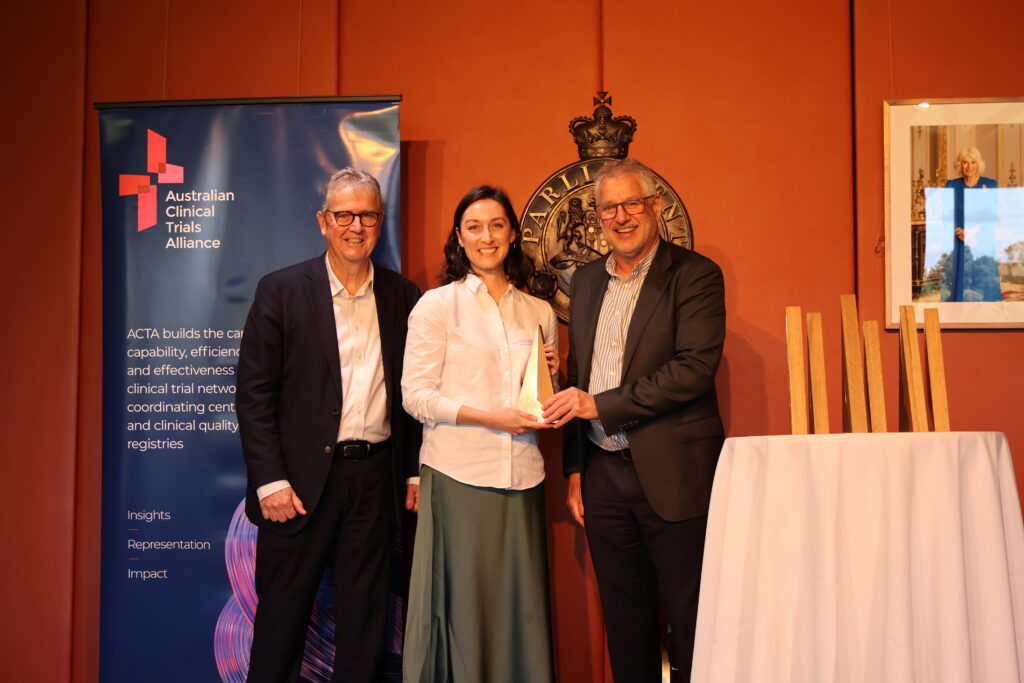
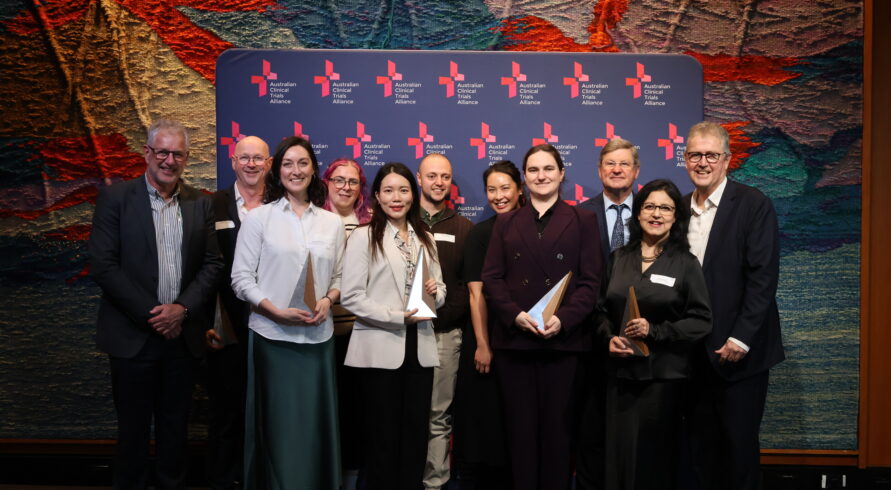
Australia's clinical trials community came together to celebrate outstanding research and recognise the people and teams making a meaningful difference to healthcare at the 2026 ACTA Trial of the Year Awards.
Now in its 10th year, the awards continue to shine a light on investigator-led clinical trials and initiatives that are improving clinical practice, influencing healthcare policy and delivering better outcomes for patients across Australia and beyond.
This year's awards showcased the breadth and strength of Australia's clinical trials sector, with achievements recognised across six categories spanning clinical trials, statistics, health economics, implementation science, consumer involvement and clinical quality registries.
ACTA Chair, Professor Chris Reid, highlighted the contribution of the nominees and winners to the broader clinical trials community, noting the expertise, collaboration and commitment demonstrated through their work.
Since their establishment in 2016, the ACTA Trial of the Year Awards have provided an opportunity to recognise the impact of clinical research and celebrate the people behind the trials. The 2026 ceremony continued this tradition, highlighting the important role Australian researchers and collaborators play in advancing healthcare and improving the lives of patients.
Congratulations to our 2026 winners
ACTA Trial of the Year Award winner
OPTIMISTmain - this trial asked an important question: do stable, low-risk stroke patients need intensive monitoring after receiving clot-busting thrombolysis treatment?
Involving nearly 4,922 patients across 114 hospitals in eight countries over 4 years, the trial found that less intensive monitoring resulted in similar level of recovery in patients at three months, without any increase in harms including the serious complication of brain bleeding.
These findings suggest monitoring can be safely tailored for carefully selected patients, reducing overnight interruptions and unnecessary ICU admissions, whilst allowing more time for rehabilitation and patient care. The approach could also reduce pressure on hospital resources, improve efficiency and deliver cost savings—without compromising patient safety.
Chief Investigator: Prof Craig Anderson
Network or investigator group: Australasian Stroke Trials Network with The George Institute for Global Health
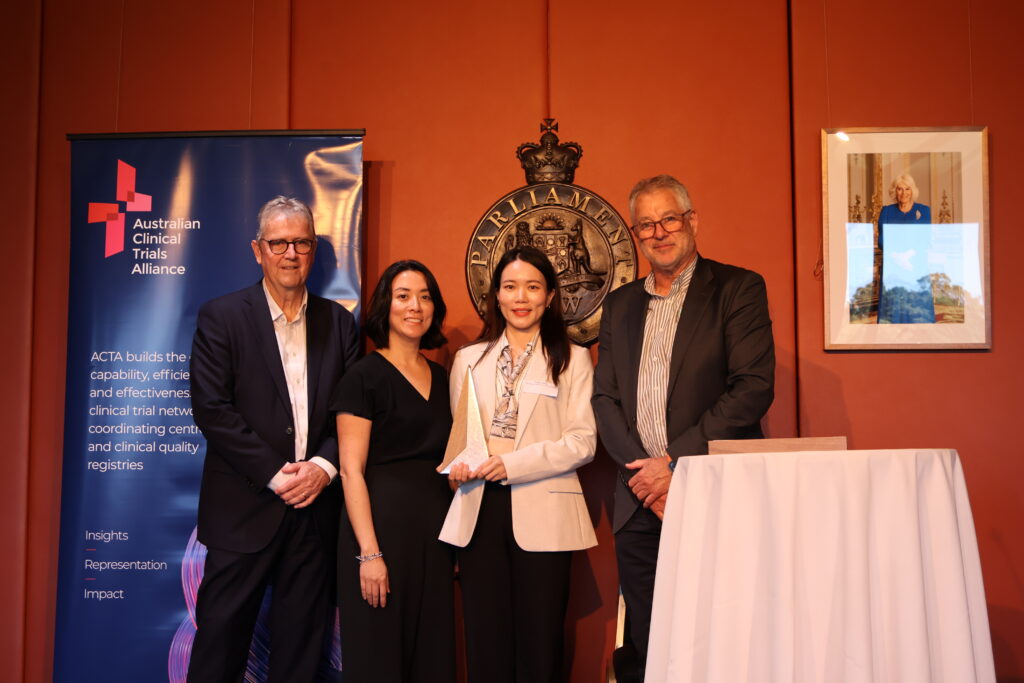
Runner-up
ALLG BM12 CAST - The ALLG BM12 CAST trial was a randomised trial of 134 participants, conducted at eight Australian and New Zealand hospitals and was published in NEJM in 2025.
The drug combination of post-transplant cyclophosphamide (PTCy) and cyclosporin offers a new standard of care for prevention of GVHD for patients with aggressive blood cancers undergoing transplant from a matched related blood stem cell donor.
The success of the trial has marked a pivotal shift in the management of blood stem cell transplants worldwide. The results from BM12 CAST are game-changing, offering a new standard of care for prevention of GVHD for patients with aggressive blood cancers.
The results show a clear and clinically meaningful benefit for patients receiving PTCy and cyclosporin. This combination significantly prolonged GVHD-free, relapse-free survival and established a new benchmark for matched related donor transplantation.
Chief Investigator: Prof David Curtis
Network or investigator group: Australasian Leukaemia and Lymphoma Group
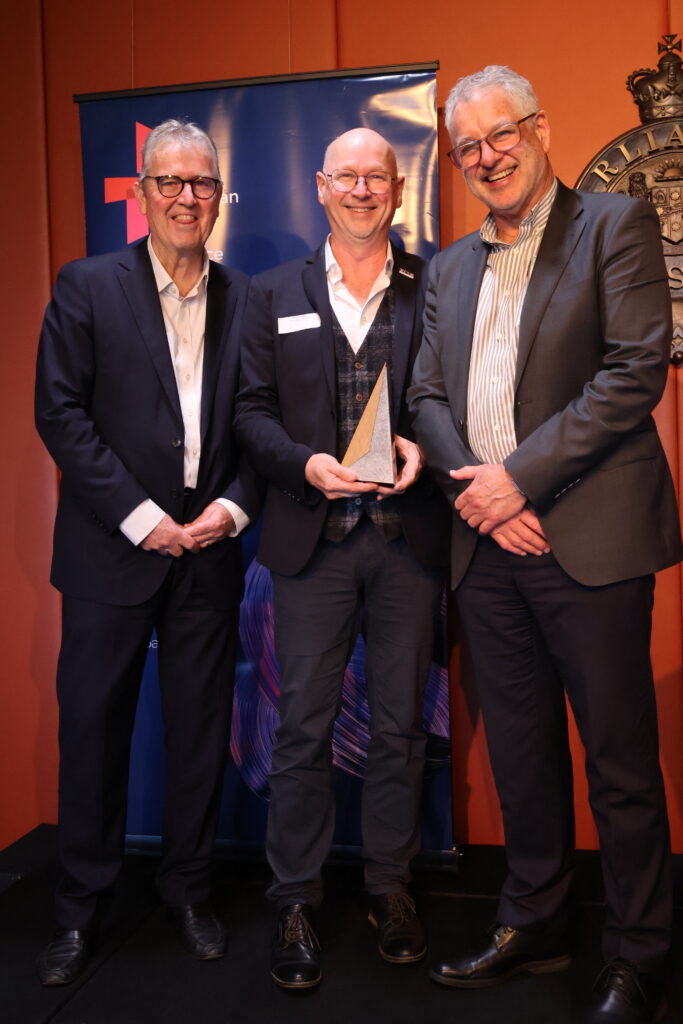
ACTA STInG Excellence in Trial Statistics Award winner
MSU TELEMED - this trial compared two models of neurologist care in Mobile Stroke Units (MSUs): having a neurologist onboard versus providing care remotely via telemedicine.
The world’s first randomised trial of telemedicine care for MSUs found that telemedicine delivered substantial efficiency gains, with only a small increase in time to treatment and no difference in safety.
Importantly, the findings have already influenced clinical practice, supporting the use of telemedicine neurologists across Melbourne’s MSUs and enabling more sustainable access to time-critical stroke care.
The trial also used innovative statistical methods, including a novel randomisation approach and hierarchical composite outcome designed around safety, treatment time and efficient use of neurologist resources.
Lead Statistician: Prof Leonid Churilov and Dr Hannah Johns
Network or investigator group: Australasian Stroke Trials Network
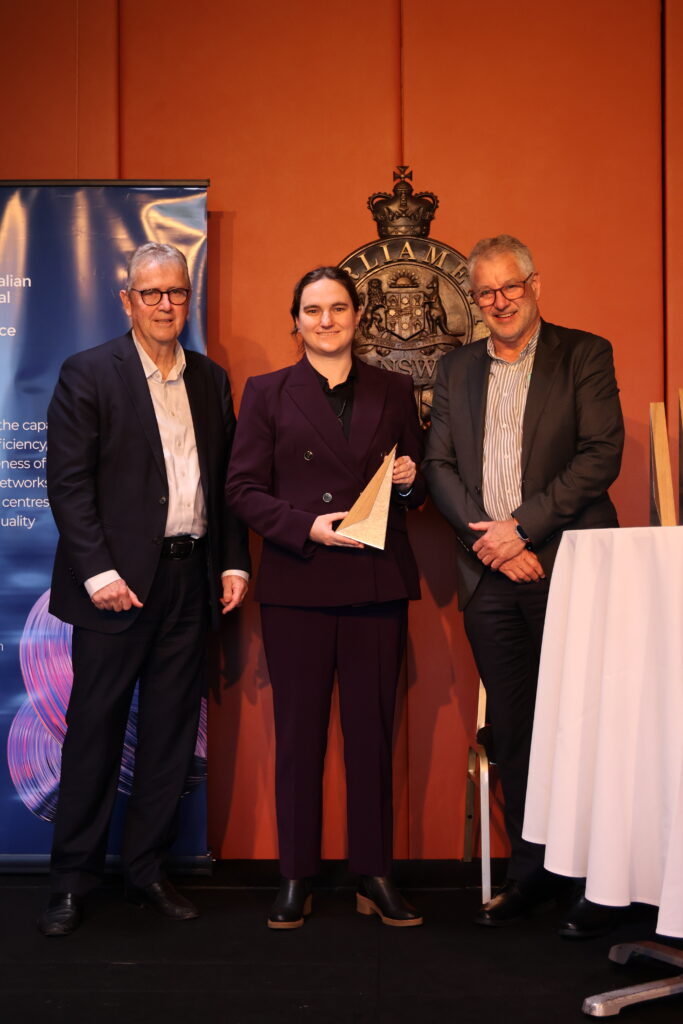
ACTA Consumer Involvement Award
NAVKIDS2 - Chronic kidney disease (CKD) in children requires ongoing management, with families often navigating a complex healthcare system to access and coordinate care. NAVKIDS2 is the first patient navigation program for children with CKD globally, evaluating whether a patient navigator can support children and families throughout their CKD journey.
The trial involved 162 children and families across six paediatric units in Australia and was co-designed and co-led with extensive consumer engagement.
While the trial found no improvement in its primary outcome, the self-rated health of the child at six months post-intervention, more than 100 interviews with families, clinicians and navigators identified important dimensions not captured by the primary outcome, including perceived benefits for children and families, barriers to implementation, and patient engagement, providing insights into how navigation was delivered and experienced in clinical practice.
These findings have informed the implementation of patient navigation as a pilot in the Nephrology department at The Children’s Hospital at Westmead, demonstrating the value of looking beyond the primary outcome to understand how an intervention works in real-world settings.
Consumer Investigator: Chandana Guha
Network or investigator group: Australasian Kidney Trials Network
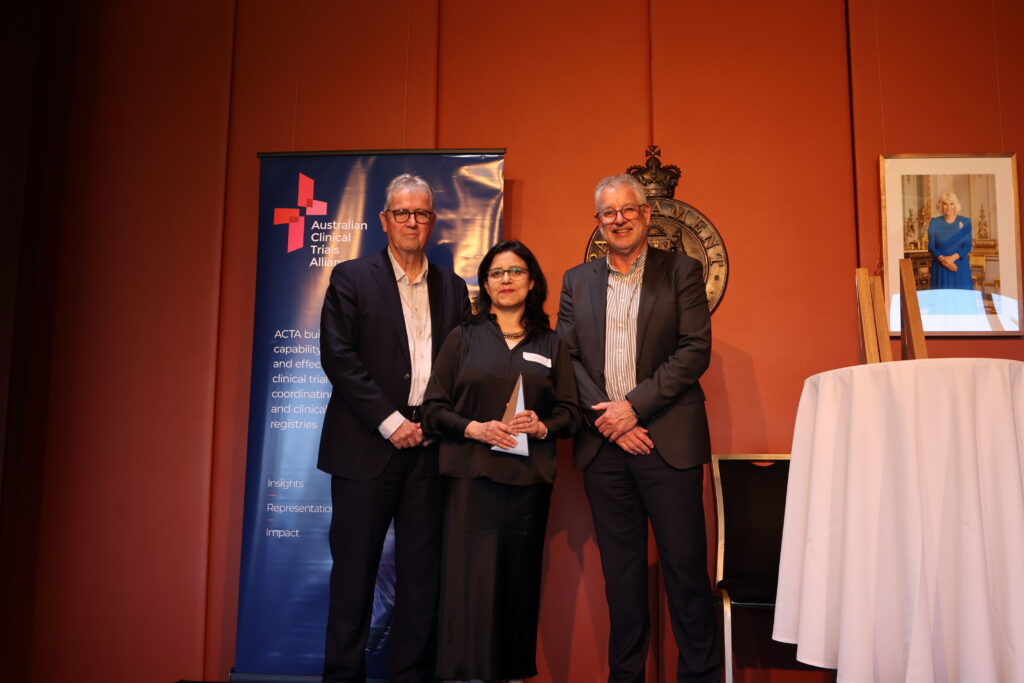
ACTA HEAT Excellence in Trial Based Health Economics Award
KADS - this trial is the largest randomised trial to evaluate racemic ketamine for treatment-resistant depression (TRD), and the first to examine its cost-effectiveness.
The economic evaluation assessed whether subcutaneous ketamine offered value for money from both health sector and societal perspectives. The analysis considered the cost impacts on healthcare use and work productivity relative to the quality of life improvements experienced by patients.
The findings provide important evidence for health policy and decision-makers. In one analysis, ketamine was less costly and more effective than the comparator, with a 91% probability of being cost-effective at the $50,000 per QALY threshold over eight weeks.
The study provides valuable evidence about the potential role of ketamine in improving outcomes for people living with TRD.
Lead Health Economist: Mary Lou Chatterton,
Network or investigator group: Growing Minds Australia
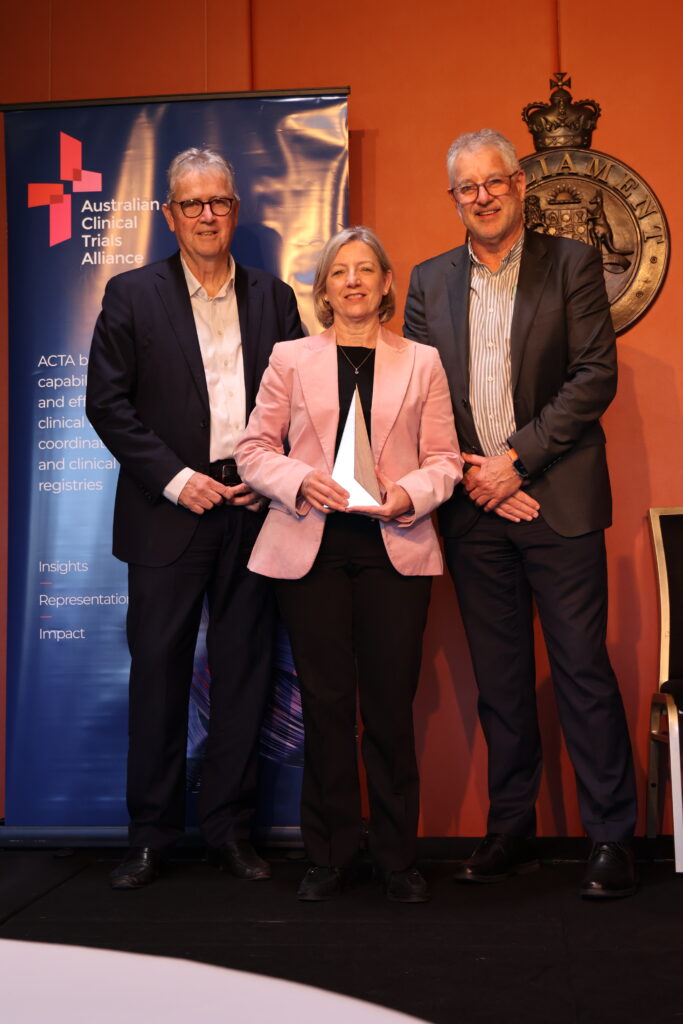
ACTA Clinical Quality Registry Award
ANZSCTS Database - For 25 years, the ANZSCTS Cardiac Surgery Database has been helping improve the quality and safety of heart surgery across Australia and New Zealand.
Now covering 65 hospitals and more than 260,000 procedures, the Database provides detailed, risk-adjusted information on patient outcomes, helping surgical teams benchmark performance and identify opportunities for improvement.
Its impact is tangible. Hospitals have used Database insights to reduce serious infections and post-operative bleeding, strengthen surgical practice and enhance clinical training.
With more than 100 peer-reviewed publications and 35 ongoing research projects, the Database is not only improving care today—it is generating evidence that will benefit cardiac surgery patients for years to come.
Chief Investigator: Prof Chris Reid
Network or investigator group: Australia and New Zealand Society of Cardiac & Thoracic Surgeons National Cardiac Surgery Database
Program
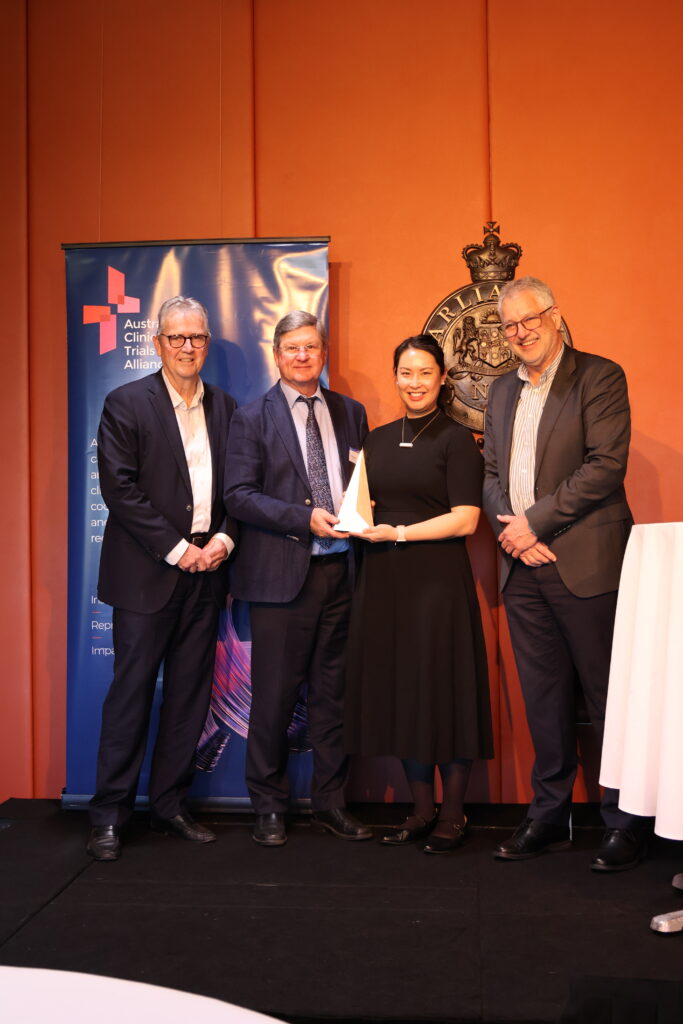
ACTA TRIPSIG Excellence in Implementation Science Award
REVAMP-TT - Anaemia affects more than 40% of pregnant women worldwide, with iron deficiency a major contributor. In low-resource settings, treating anaemia can be challenging, particularly when side effects make daily oral iron difficult to tolerate.
This randomised controlled trial compared a single 15-minute infusion of ferric carboxymaltose (FCM) with standard oral iron in 590 women with moderate to severe anaemia during the third trimester of pregnancy in Malawi.
The trial found that FCM could be safely delivered in a complex, resource-limited setting and substantially improved haemoglobin and iron levels by delivery. The infusion was highly acceptable to women and healthcare workers and showed potential as a feasible approach to treating maternal anaemia.
Chief Investigator: Prof. Sant-Rayn Pasricha (Melbourne) and Prof. Kamija Phiri (Malawi).
Network or investigator group: Methods and Implementation Support for Clinical and Health Research