
Several countries now formally include at least one aspect of equity, alongside cost-effectiveness, in health technology assessment (HTA) decisions, often focusing on need. Recent literature suggests public support for prioritising health gains for children over adults. While some agencies may indirectly consider age, none explicitly apply different weights to health gains for children.
This study (Social value of a Childhood QALY - Revealed preferences from pharmaceutical funding decisions in Australia 2005–2023 - ScienceDirect) analysed 19 years of data to quantify the additional value the Australian Pharmaceutical Benefits Advisory Committee (PBAC) implicitly places on children compared to adults in drug funding decisions. Logistic regression analysis revealed that after controlling for clinical uncertainty, effect size, cost-effectiveness and government budget impact, interventions for children were more likely to receive a positive funding recommendation. The ‘childhood effect’ persisted even when accounting for other equity considerations, such as severity, condition rarity, unmet need, and age-related intervention characteristics, including vaccination and affected bodily systems.
Our findings provide empirical evidence of a higher social value for health gains in children compared to adults. This is the first study to find a significant ‘childhood effect’ for public funding recommendations for pharmaceuticals, offering important insights for HTA frameworks that aim to incorporate societal values.
Presenter
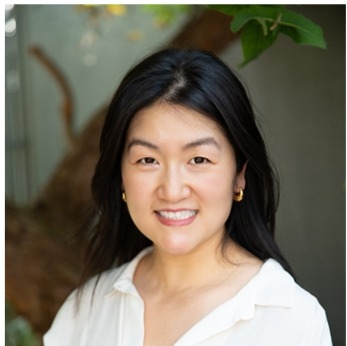
A/Prof Jing Jing Li
Jing Jing is an Associate Professor at the Centre for Health Economics, Monash University Business School. She leads the Monash University Health Technology Assessment team, conducting evaluations that inform funding decisions for health technologies globally, including for the Pharmaceutical Benefits Advisory Committee (PBAC), Medical Services Advisory Committee (MSAC), the Australian Technical Advisory Group on Immunisation (ATAGI), and the Agency for Care Effectiveness in Singapore. Her research focuses on healthcare decision-making, cancer care, cost-effectiveness analysis alongside clinical trials, and advanced decision analytic modelling.